What is a GPS territory game? A beginner's guide
A GPS territory game uses your real-world location as the game board. Where you go determines what happens in the game. The map is not a backdrop. It is the gameplay itself. If you have heard the term and wondered what it actually means, this is the plain-language explanation.
How a GPS territory game works
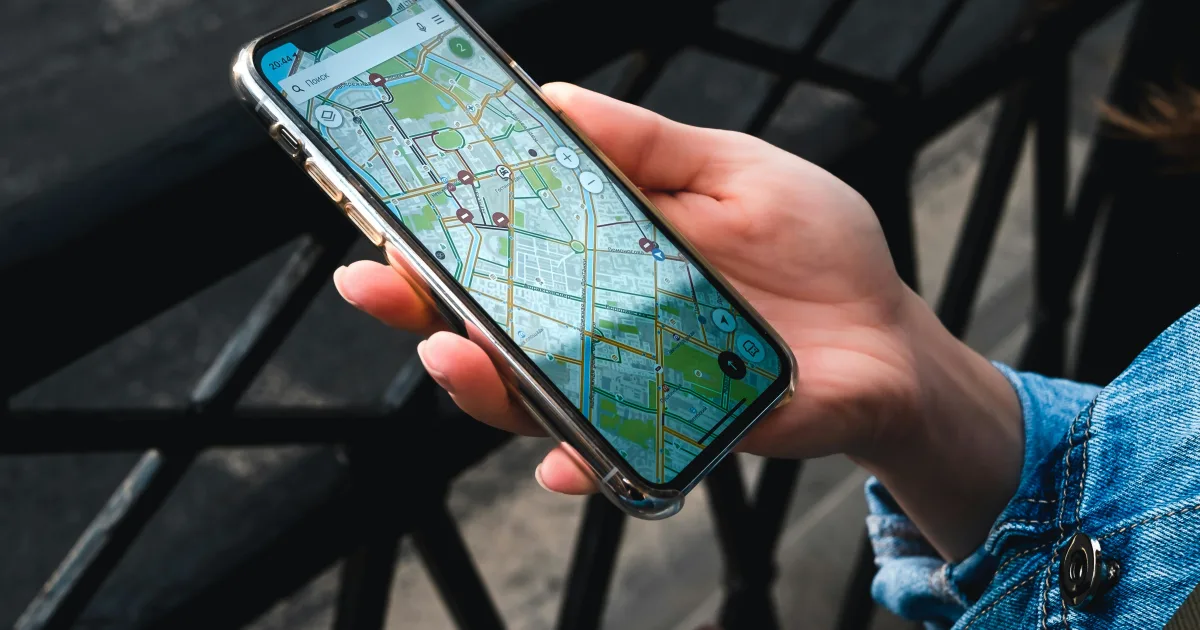
Your phone knows where you are. A GPS territory game uses that location data to let you interact with a virtual layer placed on top of the real world. As you move through physical space, you can claim zones on a shared map that other players can see in real time. Those players can challenge your zones. You can challenge theirs. The game state shifts continuously based on where people go and what they do when they get there.
The core loop is straightforward. You move in the real world. You claim territory on the map. Other players try to take it. You defend what you have and push into new ground. The map fills up over time as more players join and more territory gets contested. Unlike most mobile games, there is no single-player mode and no pausing. The world keeps moving whether you are playing or not.
What makes this different from simply tracking a walk or run is the shared layer. Your territory is visible to other players. Their territory is visible to you. The map reflects a real, ongoing competition between real people in a real place. That combination of physical movement and social consequence is what defines the GPS territory game as a category.
Why people play them
GPS territory games have built loyal communities for over a decade. Three things consistently explain why players stay engaged long after novelty wears off.
They make routine movement feel purposeful. Walking the same neighborhood block feels different when something is at stake on the map. The route you take matters. The time you leave matters. Movement that was previously just exercise becomes a series of small decisions with real consequences.
The competition is local and personal. Your rivals are not anonymous usernames on a global leaderboard. They are people in your actual neighborhood, walking the same streets, competing for the same patches of map. That proximity makes the social layer feel real in a way that most online competition cannot replicate. When someone flips your territory, you know it happened two streets away.
Consistency is the only real strategy. There is no way to binge-progress in a GPS territory game the way you can grind through levels in a traditional mobile game. You cannot make up for a week of inactivity in a single long session. The game rewards people who show up regularly over people who show up occasionally with great intensity. For players who want a game that rewards a daily habit rather than a time investment, this is a meaningful distinction.
What makes GPS territory games different from other mobile games
Almost everything in the app store is designed to keep you still. The optimal experience for most mobile games is a comfortable chair, a charged phone, and an uninterrupted hour. GPS territory games invert this completely. The game gets better the more you move. Sitting still is not a valid strategy. You cannot play effectively from your couch.
This makes GPS territory games a genuinely distinct category from nearly everything else available on mobile. They are not fitness apps that track movement passively. They are not augmented reality games that layer digital objects onto a camera view. They are competitive multiplayer games where physical movement is the primary mechanic and the real world is the arena.
The shared map reinforces this. Every player in a GPS territory game is looking at the same world. Your actions change what other players see. Their actions change what you see. The game state is persistent and public in a way that private game saves and single-player progress bars cannot be. When you claim a block, everyone who plays in that area knows it.
Turf Warz: GPS territory built for dog owners
Turf Warz is a GPS territory game built specifically around dog walking. The mechanic connects directly to something that already happens on every walk: when a dog marks their spot, the owner taps to claim that location on a live shared neighborhood map. The zone turns the owner's color. Other dog walkers in the area can flip it back. Packs of players hold territory together. Rivalries develop between dogs who keep crossing each other's turf.
What distinguishes Turf Warz from other GPS territory games is that it does not ask players to do anything new. The walk already happens. The dog already marks spots. The game layers territory, competition, and progression on top of behavior that was already occurring every day. A dog's stats grow from real walking behavior: longer walks build Endurance, faster pace builds Speed, daily streaks build Strength. Those stats matter in flip battles. Showing up consistently is both the point of the game and the point of the walk.
Turf Warz did not invent the GPS territory genre. But it is the first game to build it around something that 90 million American dog owners are already doing every single day. For that audience, the barrier to entry is lower than any other GPS territory game available. The walk is already in the schedule. The game is already waiting.
The full game guide is at turfwarz.com/how-to-play. For more on what else is worth playing in the GPS territory genre, the guide to GPS territory games in 2025 covers the field.
Where to start
GPS territory games have a learning curve but not a steep one. The core concept is simple enough to grasp in one walk: go somewhere, claim it, come back tomorrow and defend it. The depth comes from the strategy, the social layer, and the consistency that accumulates over weeks and months of play.
For dog owners the starting point is lower still. The walk is already happening. The question is whether it is working for you beyond the exercise. If the answer is that it could be doing more, the Turf Warz waitlist is at turfwarz.com. Most neighborhoods are still unclaimed.
Want to make every walk count?
Turf Warz turns your daily dog walk into a battle for neighborhood territory. Claim your block, level up your dog, and fight off your rivals — walk by walk.